When I started my career as a clean room sandwich panels supplier 12 years ago, I thought the hardest part of the job was manufacturing the panels to meet ISO 14644-1 standards. That changed on a rainy Tuesday in 2014, when a client in the pharmaceutical industry received a shipment of our wall panels with dented faces and cracked core material. Clean Room Sandwich Panels
That order was for a new line of cell culture labs, and the delay cost them critical production time. The client didn’t just get bad panels—they lost trust. Since then, I’ve spent countless hours learning how to transport clean room sandwich panels safely. It’s not just about moving material from point A to B; it’s about protecting every clean surface, maintaining the structural integrity of the panel core, and ensuring the final product works as intended in a space where even a single particle can ruin months of research or millions of dollars in product.
Today, I work with a team of drivers, material handlers, and logistics coordinators who’ve mastered this process. What I want to share with you is the practical, field-tested knowledge we’ve built over the years—no fancy theory, just the steps that have saved our clients from headaches, delays, and extra costs.
First, let’s start with pre-transport preparation. This is where most mistakes happen, even with experienced teams. Clean room sandwich panels come in two main types: wall panels and ceiling panels, each with unique vulnerabilities. Wall panels have a rigid outer steel or aluminum skin, but their edges are thin and easy to bend. Ceiling panels, on the other hand, often have a lighter core for thermal efficiency, making them susceptible to warping if not supported properly.
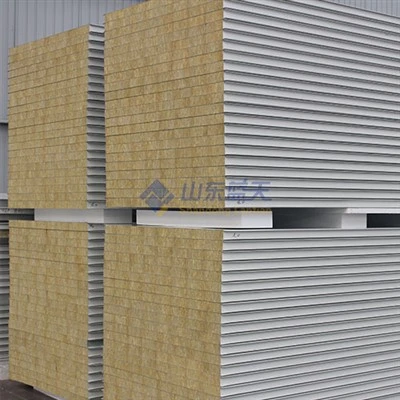
Before any shipment leaves our warehouse, we measure each panel’s dimensions and check the type of core: polystyrene (EPS), polyurethane (PUR), or mineral wool. Each core requires different handling. EPS is fragile, so it needs extra support to avoid compression damage during transit. Mineral wool is dense but can absorb moisture if the panel’s skin is punctured. This pre-shipment check isn’t just a formality—last year, we almost sent an order of PUR panels with a hidden scratch on the skin, which could have let rain seep in during transport and ruined the core. We caught it by cross-referencing our dimension logs with a quick visual inspection, and we’ve never skipped that step since.
Next, we customize packaging for each load. Standard cardboard or shrink wrap won’t cut it here. The clean side of the panel—what will face the inside of the clean room—can’t touch any rough surface, dust, or moisture. So, we use protective liners made of low-lint, polyethylene foam that’s designed specifically for clean room components. These liners are static-dissipative too, which is important because static electricity can attract particles and even damage sensitive electronic components that might be stored nearby during installation. We line both the top and bottom of every panel stack, and we don’t allow any tape directly on the panel’s clean surface. Instead, we use edge protectors made of corrugated plastic, which run along the long edges of the panels to prevent dents when they’re stacked.
Stacking is another critical step. We never stack panels higher than six feet, even if the truck can hold more. Why? Because the lower panels in a high stack get compressed under the weight, which can bend their core or create a gap between the skin and the core that’s hard to see until installation. For wall panels, we stack them vertically, standing on their narrow edge, with wooden spacers between each panel to keep them from rubbing together. Ceiling panels are heavier, so we stack them horizontally, with every panel supported at two points—about one-quarter of the way from each end—instead of in the middle. If you support a ceiling panel in the middle, gravity will cause the center to bow, and that bow will be impossible to flatten once it’s installed, ruining the panel’s fit in the ceiling grid.
Once stacked, we secure the load with heavy-duty straps, but not just any straps. We use rubberized straps, not nylon, because nylon straps can scratch the panel’s surface if they slip during transport. We place padding under the straps where they touch the panels, and we never tighten straps so much that they compress the panel’s edges. For long-haul shipments, we also add a cover that’s waterproof, UV-resistant, and has vents. Trapped moisture is a big enemy here—even a small amount of water can get between the panel’s skin and core, leading to mold growth over time. The vents let air circulate, preventing condensation, which is especially important when moving from a cold warehouse to a warm, humid climate.
Now, what about the transport vehicle itself? Not all trucks are built for moving clean room panels. We use enclosed box trucks, not open flatbeds. Flatbeds expose panels to wind, rain, and debris that can scratch the surface or puncture the skin. Enclosed trucks also protect against temperature swings, which can cause metal skins to expand or contract, leading to warping. We inspect every truck before it leaves our yard: we check for loose parts inside the box that could rub against panels, we make sure the floor is dry and free of nails or screws, and we confirm that the temperature inside the truck stays between 10°C and 30°C. Extreme heat can soften EPS cores, while extreme cold can make metal skins brittle and more prone to dents.
The driver plays a huge role too. We don’t just send any driver to pick up our panels. Our drivers go through specialized training: they learn how to navigate rough roads without speeding, because sudden stops or sharp turns can make the load shift. They also get a clean room safety briefing—they have to wear shoe covers when they enter our warehouse to pick up the panels, and they’re not allowed to eat, drink, or smoke inside the truck during transport. Even a crumb or a drop of soda can carry particles that contaminate the panel’s clean surface. Last year, a driver from another carrier we used forgot his training and ate a sandwich in the truck. When we unloaded the panels, we found a crumb on one of the ceiling panels, which meant we had to wipe down every panel again before delivery to the client, adding two days to the project timeline. That’s why we now only work with carriers whose drivers understand the sensitivity of clean room materials.
Unloading is just as important as loading, and we coordinate with the client to make sure the site is ready before the panels arrive. We never unload panels in an open area, even for a few minutes. If the client’s building isn’t fully enclosed yet, we bring a temporary plastic enclosure to unload under, to keep dust and moisture out. We also assign two people to unload, not one—trying to lift a long wall panel by yourself is a good way to drop it or bend an edge. We use lifting straps that attach to the panel’s edge protectors, not the clean surface, and we lift slowly, keeping the panel vertical at all times when unloading wall panels. Ceiling panels are carried horizontally, with two people at each end, and we never drag them across the floor, even if the floor looks clean.
Wait a minute, I know some people might think these steps are overkill. Why go to all this trouble for a sandwich panel? Because clean rooms are the backbone of industries that depend on purity. A pharmaceutical clean room has to maintain zero particle count to manufacture vaccines, so even a single scratch on a panel’s surface can create a tiny crevice where bacteria or dust can hide. A semiconductor clean room needs panels that don’t off-gas harmful chemicals, which means the panel’s seal has to be perfect. If a panel is damaged during transport, the client has to not only replace the panel but also test the entire room’s particle count after installation, which can cost tens of thousands of dollars and delay their product launch by weeks.
Over the years, we’ve tested different methods to streamline this process without sacrificing safety. We started using reusable edge protectors made of recycled plastic, which reduced waste and worked better than disposable cardboard. We also added barcodes to every panel, so we can track their location in the truck and confirm each one is unloaded intact at the client’s site. This small step has cut down on missing panels and reduced errors during installation.
One of our most valuable lessons came from a client who installs clean rooms for research labs. They told us that 10 years ago, they would receive 5-10 damaged panels per shipment, which meant they had to store extra panels on-site “just in case.” Now, with the steps we follow, that number is down to less than one damaged panel every 10 shipments. That’s saved them thousands of dollars in inventory costs, and they’ve been using us as their exclusive clean room sandwich panel supplier ever since.
I also want to address a common misconception: that all clean room panels are the same, so transport doesn’t matter. That’s not true. The grade of the clean room—whether it’s Class 100 for pharmaceutical manufacturing or Class 10,000 for general research—dictates how sensitive the panels are. For higher-grade clean rooms, we add an extra layer of static-shielding film over the clean surface before packaging, to prevent static from attracting particles during transit. We adjust our packaging and transport methods based on the client’s specific clean room grade, not just the panel type.
Another thing we’ve learned is communication. We check in with the client a week before delivery to confirm their unloading area is ready, and we send photos of the loaded truck before it leaves our warehouse, so they can see that the panels are secured properly. This prevents last-minute surprises, like the client’s crane being unavailable, or their building not being sealed yet.
At the end of the day, transporting clean room sandwich panels safely is about respect. Respect for the client’s timeline, respect for the work that happens inside their clean room, and respect for the material that will make that work possible. We don’t just sell panels—we sell peace of mind, knowing that when the panels arrive, they’re ready to be installed and do their job, no extra work required.
If you’re planning a clean room project, whether it’s a small lab or a large pharmaceutical manufacturing facility, you don’t have to stress about damaged panels or costly delays. Our team has the experience, the specialized equipment, and the rigorous process to get your panels to your site safely, every time. We work with clients across the globe, adapting our transport methods to different climates, road conditions, and project requirements. Contact us to discuss your clean room panel needs, and we’ll put together a customized plan that fits your timeline and budget. We’ll even share a detailed breakdown of our transport process, so you can see exactly how we protect your material from the warehouse to your site.
GI Steel Coil References
- International Organization for Standardization. ISO 14644-1: Cleanrooms and associated controlled environments – Part 1: Classification of air cleanliness by particle concentration. 2015.
- Controlled Environment Technology and Association. Guidelines for Handling and Transporting Clean Room Components. 2018.
- American Society of Heating, Refrigerating and Air-Conditioning Engineers. ASHRAE Handbook: Heating, Ventilating, and Air-Conditioning Applications. 2021.
- International Society for Pharmaceutical Engineering. Cleanroom Design, Qualification, and Operations Guideline. 2019.
- National Sanitation Foundation. Standard for Cleanroom Materials and Components. 2020.
Shandong Lantian New Material Technology Co., Ltd.
Shandong Lantian New Material Technology Co., Ltd. is one of the most reliable manufacturers and suppliers of clean room sandwich panels in China, featured by quality products and low price. Please rest assured to buy bulk clean room sandwich panels for sale here from our factory. Contact us for pricelist and customized service.
Address: North End of Wanshida Road, Dianzi Town Industrial Park, Boxing County, Binzhou City, Shandong Province
E-mail: Lantian023@ltaaaaa.com
WebSite: https://www.ltpirpanels.com/
