If you’ve ever stood in a backyard at 7 a.m. on a Saturday, rake in hand, staring down a mountain of clippings from what felt like 10 acres of overgrown grass, you get why grass shredders aren’t just another garden tool—they’re a small revolution for anyone who’s ever tried to turn yard waste into something useful. I’ve been a grass shredder supplier for 12 years now, and more times than I can count, I’ve had customers stop by my shop, clench a bag of mulchy leaf scraps they brought along, and say, “I thought these just chopped stuff up. Turns out they do way more?” That’s the thing about these machines: most people see a big box with a power cord or a gas tank, but the science of how they work is actually surprisingly straightforward, and the little details are what make all the difference when you’re dumping that mountain of clippings. Grass Shredder
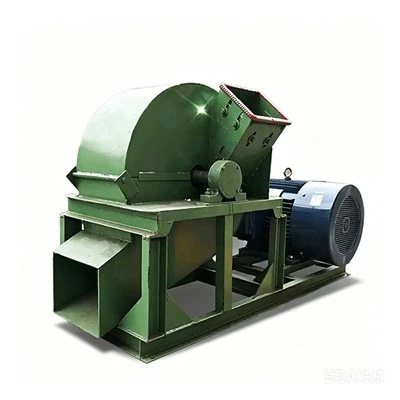
Let’s start with the core purpose here, because it’s easy to mix up grass shredders with lawn mowers or even wood chippers, and that confusion is where a lot of bad experiences begin. A lawn mower cuts grass, sure, but it leaves clippings at whatever height you set, and they’re still long enough to clump if you bag them. A wood chipper, on the other hand, is built for branches and twigs—hard, dense material that needs way more force to break. Grass shredders (we also call them grass mulchers, if that helps) are designed specifically for fresh or dry grass, weeds, small garden trimmings, and even things like dead flower heads or light vegetable stalks. Their whole job is to take that soft, stringy plant material and reduce it to tiny, uniform pieces—usually a quarter-inch or smaller—so you can use it as mulch, compost, or even just dispose of it without filling a dozen garbage bags.
Now, how do they do that? Let’s break it down step by step, starting with the basic components you’ll find in almost every model we supply. First, there’s the feeding chute—that’s the opening you toss the grass into. It’s usually angled slightly upward to keep you from sticking your hand in by accident, a small safety feature that’s saved more than a few customers from minor cuts. Right behind the chute is the cutting chamber; this is the heart of the machine, and it’s where all the work happens. Inside the cutting chamber, you’ll find a rotating shaft (called a rotor) with either sharpened blades or flexible flails attached to it. Some budget models have two blades, while the heavier-duty ones have four or more, depending on the machine’s power. There’s also a stationary blade fixed to the inside of the chamber wall, right across from the rotating blades—this is called a shear bar, and it’s the unsung hero of the whole operation. Without that stationary edge, the rotating blades would just spin around and around, not actually cutting anything.
Let’s walk through what happens when you feed a handful of clippings into the chute. First, gravity pulls the grass down into the cutting chamber, and as soon as it touches the rotating rotor, the blades or flails grab onto the material. If the machine has blades, the sharp edges on both the rotating blade and the stationary shear bar work together like a pair of household scissors. The rotor spins at a consistent speed—most grass shredders run between 3,000 and 5,000 RPM, which is fast enough to give the blades enough force to slice through even thick clumps of wet grass. When flails are used, those are heavy, flexible metal straps that swing out when the rotor spins. Instead of slicing, they hit the grass with a blunt, repeated impact, which is great for softer, moister material that might get tangled on rigid blades. Flail models are also quieter, which is a big plus if you’re shredding on a weekend when the neighbors are trying to sleep.
Once the initial cut happens, the shredded pieces don’t just fall out. There’s usually a screen at the bottom of the cutting chamber—this is another part that makes a huge difference in how fine your shred will be. The screen is a metal plate with holes of a specific size, anywhere from 1/8-inch to 1/2-inch. When the rotor spins, it flings the cut pieces around inside the chamber, and only the pieces small enough to fit through the holes fall through into the collection bin. Any pieces that are too big get tossed back up into the cutting chamber to get shredded again. That’s why you end up with such uniform mulch—no more random long strands mixed in, no big chunks of unprocessed grass.
Wait, but we should talk about the two main power sources too, because that’s a question we get all the time at the shop: electric vs. gas. Electric models are great for small to medium yards, up to a quarter-acre. They plug into a standard 120-volt outlet, so you don’t have to worry about buying gas or changing oil, and they’re quieter than gas models, usually running at around 60 decibels—about as loud as a normal conversation. The downside is the power cord, which can limit how far you can go from your house, and if you have a big yard with no outdoor outlet, electric might not be enough. Gas models, on the other hand, run on small, two-stroke or four-stroke engines, and they’re built for yards of a half-acre or more. They’re more powerful—up to 10 horsepower, compared to electric’s 1.5 to 2.5 horsepower—and they don’t have a cord, so you can move them around anywhere in the yard. The tradeoff is they’re louder (around 75 decibels, like a vacuum cleaner), need regular maintenance, and you have to store gas properly, which means they’re not ideal for small urban yards or people who only use a shredder once a month.
I’ve seen a lot of customers make the mistake of buying the cheapest gas shredder they can find, only to have it break after a few uses because they tried to shred wet grass that had clumped up, or they stuffed too much material into the chute at once. That’s another part of how these machines work—they have limits, and respecting those limits is key to getting good results and keeping the shredder running for years. For example, most grass shredders can only handle 2 to 5 pounds of material per minute, depending on the model. If you toss in a big handful of wet clippings all at once, they’ll clump together, get stuck in the cutting chamber, and the machine will either jam or strain so hard that it burns out the motor. We always tell customers to shred in small batches, no more than a handful at a time, and to break up any large clumps before feeding them in. That tiny step saves so much hassle later.
Another common misconception is that grass shredders are only for dry clippings. We get calls in the spring, after a rain, from people asking if their wet grass will clog the machine. The short answer is, it can if you feed it too much at once, but most good grass shredders (which is what we supply) are designed to handle light amounts of damp grass. Wet grass just compacts more easily, so you have to go slower, and you’ll end up with a slightly more chunky mulch, which is fine for compost anyway—chunks break down faster than fine powder in a compost pile. If you do have a lot of wet grass, we recommend letting it sit in a thin layer for a day or two to dry out a bit first, which makes shredding much easier.
Now, let’s talk about what happens to that shredded grass once it’s in the collection bin, because that’s the whole point of using a shredder, right? Those tiny, uniform pieces are perfect for two main uses: mulch and compost. If you spread grass mulch around your flower beds or on top of your vegetable garden, it keeps moisture in the soil, so you don’t have to water as often, and it suppresses weeds without the need for harsh chemicals. Unlike wood mulch, grass mulch is high in nitrogen, which is a great nutrient for plants, so it actually feeds the soil as it breaks down, instead of just sitting there for a year. For compost, shredded grass is a “green” material—high in nitrogen, as opposed to “brown” materials like dry leaves or straw, which are high in carbon. A good compost pile needs a mix of greens and browns, so your shredded grass mixed with dry leaves makes the perfect compost recipe, and it breaks down in half the time it would take if you just threw whole clippings into the bin.
I’ve been in this business long enough to know that the best grass shredders aren’t the ones with the flashiest features or the lowest price tag. They’re the ones that work consistently, year after year, whether you’re shredding 5 pounds of clippings on a quiet Sunday or 50 pounds after a weekend of heavy rain. We’ve had customers who bought a basic electric shredder from us 10 years ago, and they still use it every summer, bringing it in for tune-ups once a year. That’s the kind of product you want—something that does exactly what it’s supposed to do, no fancy bells and whistles, just solid science and durable parts.
If you’re a homeowner who’s tired of bagging up clippings and paying the city to take them away, or a gardener who wants to make your own compost or mulch to save money, a grass shredder is one of the most useful tools you can buy for your yard. But I always tell people to do their research, and to think about how much material they’ll be shredding, how big their yard is, and whether they have an outdoor outlet before they make a purchase. That’s why we’re here—we don’t just sell machines, we help people pick the right one for their needs, because nothing makes me happier than seeing a customer come back a year later and tell us how much time and money their shredder has saved them.
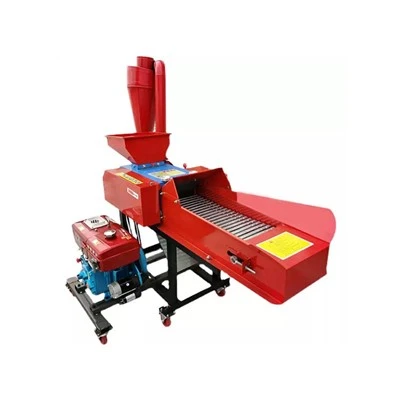
Whether you’re a first-time buyer or you’re looking to upgrade your old machine, we’ve got a range of grass shredders to fit every yard and every budget. If you’ve got questions about how a specific model works, what size shredder you need for your property, or how to maintain your machine to keep it running for years, we’re here to help. Reach out to us to schedule a consultation, and we’ll walk you through everything—from the basics of how a grass shredder cuts and processes material, to the best uses for your shredded grass, to routine maintenance tips that will keep your machine in top shape. Don’t let another yard waste weekend turn into a backbreaking chore—let a grass shredder do the work for you, and start turning those clippings into something useful for your garden.
Forage Pulper References:
- Lawn & Garden Equipment Manufacturers Association. "Grass Mulcher Operating Guidelines." 2021.
- American Horticultural Society. "Composting with Shredded Yard Waste." 2019.
- Outdoor Power Equipment Institute. "How Rotary Cutting Systems Work in Yard Tools." 2020.
Zhengzhou Xinyihaotong Machinery Manufacturing Co., Ltd.
As one of the most professional grass shredder manufacturers in China, we also support custom service. We warmly welcome you to buy high quality grass shredder for sale here from our factory. For price consultation, contact us.
Address: Rooms 2301–2312, Jiayi Building, Xinxiang City, Henan Province, China
E-mail: zhaoyixuan5566@gmail.com
WebSite: https://www.xyhtmachinery.com/
