If you’ve ever stood in a kitchen showroom staring at quartz countertops, running your fingers over the edge of a 2cm slab next to a 3cm one, and wondered “wait—does this actually matter?”, you’re not alone. As a quartz countertop supplier who’s fielded this exact question a hundred times (from first-time homeowners renovating their condos to contractors kitting out a dozen apartment units at once), I can tell you it’s one of the most underrated decisions people make when picking quartz. Most folks default to whatever looks “right” or whatever the sales rep pushes, but thickness isn’t just a cosmetic detail—it affects how your counter holds up for years, how much it costs, and even how easy it is to install. Let’s break down the stuff you actually need to know, no jargon, no confusing specs, just real talk that’ll help you pick what fits your life. Quartz Countertop

First off, let’s get the basics out of the way. Quartz countertops come in three main thicknesses these days: 2cm (that’s also called 3/4 inch for you imperial folks), 3cm (1 1/4 inch), and there’s also a newer 1.2cm option for super slim, modern designs, but we’ll stick to the two heavy hitters since they’re what most people use. Now, before we jump into which is better for your needs, let’s talk about why thickness matters beyond the pretty surface. Quartz is engineered, right? It’s 93% ground natural quartz mixed with resin and pigments, compressed under massive heat. So thicker slabs aren’t just more quartz—they’re denser, more rigid, and less likely to flex or chip when you’re cutting something heavy or leaning on the edge. That’s the science part, and it checks out every single time.
Let’s start with the most common use case: residential kitchens. This is where I see most people trip up, because it depends on how you use your kitchen. If you’re the type who bakes every weekend, hosts dinner parties where you’re hauling roasting pans and coolers onto the counter, and maybe even let the kids do homework or craft projects on there, 3cm is almost always the sweet spot. Why? That extra centimeter of thickness makes a huge difference in durability. I’ve seen way too many 2cm countertops crack when someone dropped a heavy stand mixer or leaned too hard on the overhang of a breakfast bar (more on overhangs in a sec). The 3cm slab is stiffer, so it doesn’t flex, which means no cracks, no seams that pull apart, and it just feels more solid under your hands. It also has a nicer, thicker edge profile—think bullnose or waterfall edges look way more substantial on 3cm, not like they’re going to snap off if you bump them with a chair leg.
But wait, don’t write off 2cm entirely. If your kitchen is pretty low-use? Like, if you rent your place and only use the counter for microwaving snacks and cutting vegetables occasionally, or you’re on a tight budget, 2cm can work. It’s lighter, which sometimes makes installation cheaper too (less labor for hauling and securing a thinner slab). But here’s the catch with 2cm: it’s not for overhangs. If you want that breakfast bar where you can tuck stools under, any overhang over 10 inches needs to be supported, and even then, I’d still recommend 3cm for over 12 inches. I once had a client who installed a 2cm slab with a 14-inch overhang, and six months later it sagged a little—enough that the stools wouldn’t fit under, and the seam on the side started cracking. We had to replace it with 3cm, and he admitted he probably should’ve gone that way from the start. Lesson learned: overhangs = 3cm, no exceptions for most residential jobs.
Now, what about other spaces? Bathrooms are a big one. A lot of people think quartz is only for kitchens, but it’s perfect for bathroom vanities because it’s water-resistant, stain-proof, and easy to clean. For bathrooms, 2cm is super popular because vanity tops are usually smaller, no big overhangs, and you don’t have heavy stuff like stand mixers bouncing on them. I’ve installed 2cm quartz in hundreds of bathrooms, and they hold up great—until you add a double vanity with a big sink cutout. Wait, cutouts are another thing to consider. If you’re doing a big farmhouse sink that’s heavy, the counter around the sink needs to be sturdy. For a farmhouse sink, even in a bathroom, I’d lean toward 3cm, just because the cutout is bigger and you don’t want the quartz cracking under the sink’s weight. For small, standard bathroom sinks? 2cm is totally fine.
Commercial spaces are a whole other ballgame, but since a lot of my clients are small business owners, I’ll mention this too. If you’re doing a café, a retail checkout counter, or a small office kitchen, 3cm is the way to go. Commercial spaces get way more foot traffic and abuse than homes—trays being slammed, spills left out, even carts rolling over the counter by accident. A 2cm slab would scratch or chip way faster there, and repairs are a pain (pun intended) for a busy business. We had a café client a couple years back who went with 2cm to save a few bucks, and within a year, their counter had so many chips from coffee cups and pastry trays that they had to replace half of it. They came back to us for 3cm for their second location, and they haven’t had issues since.
Now, let’s talk about the cost, because that’s a big factor for most people. Generally, 3cm quartz is about 15-25% more expensive per square foot than 2cm. That might not sound like a huge number, but when you’re doing a whole kitchen (which is usually 50-80 square feet), that adds up to a few hundred bucks. So it’s worth weighing that extra cost against how long you plan to stay in your home. If you’re selling in 5 years, 2cm is fine—most buyers won’t notice or care. If you’re staying for 10+ years, the extra durability of 3cm is worth the investment, because you won’t have to replace it later.
Wait, I should also mention edge details, because they tie right into thickness. If you want a mitered edge—those super sharp, seamless edges that look like the slab is folded over—you need 3cm quartz. You can’t miter 2cm, because it’s too thin to cut that cleanly without it snapping. If you’re into modern, sleek designs, that’s a non-negotiable. On the flip side, if you want a simple straight edge or a basic bullnose, 2cm works great, and it’s easier to cut those profiles without any issues.
Let’s talk about common mistakes I see people make, just to save you the hassle. First, buying 2cm for a big overhang. I touched on this earlier, but it’s worth repeating—even if your contractor says “it’s fine,” trust me, it’s not. I’ve seen contractors cut corners with 2cm overhangs, and every time it ends badly. Second, choosing thickness based on color or pattern. I get it—you love that marble-look quartz, and it comes in 2cm, so you go for it. But if that same color is available in 3cm, always pick the thicker one unless you have a really good reason not to. Third, forgetting about the support structure. Even if you pick the right thickness, if your cabinets under the overhang aren’t supported properly (like no bracket under the counter), even a 3cm slab will sag. That’s not the quartz’s fault—that’s installation, so make sure your contractor knows what they’re doing.
Wait, what about the 1.2cm thin slabs I mentioned earlier? Those are super popular for accent walls, backsplashes, or floating shelves, right? They’re not for countertops at all, basically. I only sell those for decorative uses, because they’re way too fragile for daily use. So if someone asks me about that, I always say “save that for the backsplash, not the main counter.”
Let me wrap this up with a quick cheat sheet, so you can reference it later. For residential kitchens: if you have a small kitchen, no overhang under 10 inches, light use? 2cm is okay. If you have a big overhang, heavy use, plan to stay long-term, or want a fancy edge? 3cm. For bathroom vanities: small single sinks, no overhang? 2cm. Double sinks, farmhouse sinks, or any overhang? 3cm. For commercial spaces: always 3cm, no exceptions. For decorative stuff (backsplashes, shelves)? Thin 1.2cm, not used for counters.
At the end of the day, the best thickness for you depends on three things: how you use the space, your budget, and how long you plan to be there. I always tell clients to think about their daily life: do you drag heavy pots and pans around? Do you have kids or pets that might bump the counter? Do you host a lot? If yes, go 3cm. If you’re in a small rental, don’t care too much about long-term, and your space is low-stress, 2cm works.
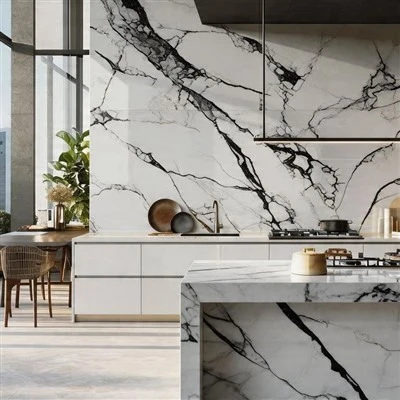
If you’re still unsure, or you want to see samples of both thicknesses side by side, hit us up to chat through your project. We can send over sample slabs, break down exact costs for your space, and answer any other weird questions you have—like how to clean quartz, if it stains, whatever. There’s no pressure, just real advice from someone who’s been in the quartz game for years, seeing what works and what doesn’t. Don’t waste money on the wrong thickness, and don’t settle for something that’ll leave you fixing issues down the line.
Quartz Slab Colors and Patterns References:
- National Tile Contractors Association. Quartz Countertop Installation Best Practices, 2022.
- Marble Institute of America. Engineered Quartz: Performance and Design Guidelines, 2021.
- Quartz Manufacturers Association. Thickness Specifications for Residential and Commercial Quartz Surfaces, 2023.
Wuhu Junde New Material Technology Co., Ltd.
As one of the most experienced quartz countertop manufacturers and suppliers in China since 1998, we warmly welcome you to wholesale top-quality quartz countertop made in China here from our factory. If you have any enquiry about cooperation, please feel free to email us.
Address: No.8 Yulin Road, Xinwu Economic Development Zone, Anhui Province, China
E-mail: 1127319898@qq.com
WebSite: https://www.jundequartz.com/
