If you’ve ever been stuck on a long road trip watching your electric vehicle (EV) battery drain, or watched a delivery driver panic as their route’s final stop ticks down, you’ve probably thought about one question: why can’t swapping a battery be as fast as swapping a gas can? As the founder of a smart battery charging and swapping cabinet supplier, I get this question constantly—both from frustrated operators and curious EV owners. The most common follow-up: what’s the actual response time of these cabinets when a battery is swapped? It’s not a simple number, and it’s not something we guess at in a lab. It’s something we’ve measured over 7,000+ swaps for delivery fleets, ride-hailing drivers, and last-mile logistics providers across North America and Europe, and it makes all the difference between a solution that works for real life and one that’s just a cool concept. Smart Battery Charging and Swapping Cabinet
Let’s break this down step by step, because “response time” for a smart swapping cabinet isn’t a single stat—it’s a sequence of small, timed moments that add up to how long a driver waits from the second they tap their app to get a new battery, to the second they pull away with a fully charged one. The first phase is driver interaction, and here’s where we’ve cut the most fat over the last three years. Early in our development, we tried complicated touchscreens with multiple steps: select battery, scan QR code, confirm model. That took 12 to 15 seconds per swap, and for a driver making 30 stops a day, that added almost 7 minutes to their route. Now, we use Bluetooth Low Energy (BLE) pairing built into our partner apps—drivers tap a “Swap” button once, and the cabinet connects automatically if they’re within 3 meters. No scanning, no extra taps. That initial driver input step is down to 2 to 3 seconds, a number we validated with 120 delivery drivers in Chicago last quarter, who told us they didn’t even notice the step after the first week of use.
Next comes cabinet authentication and battery selection, the core of its “smart” behavior. This is where our cloud-linked system kicks in, and it’s not just about speed—it’s about reliability. Before we built our cabinets, many competitors used local only logic, which meant if Wi-Fi cut out mid-selection, the whole process froze. Our system checks in with our cloud server in under 500 milliseconds to pull real-time data: is the driver’s account active? Do they have access to their battery model? Which of the cabinet’s slots has a battery charged to 95% or higher (we set a minimum because a 70% battery isn’t worth swapping for a driver going 100 miles)? That round trip—cabinet to cloud and back—takes 800 milliseconds on average, even in areas with spotty cellular service, because we built a local cache on each cabinet that stores 7 days of driver and battery data, so if connectivity drops, it can still select a battery in 1.1 seconds without waiting for the cloud. The whole authentication and selection phase? We’ve averaged 2.2 seconds across 10,000 swaps, with a worst-case time of 4 seconds only during temporary server updates, which we schedule during off-peak hours to avoid disrupting drivers.
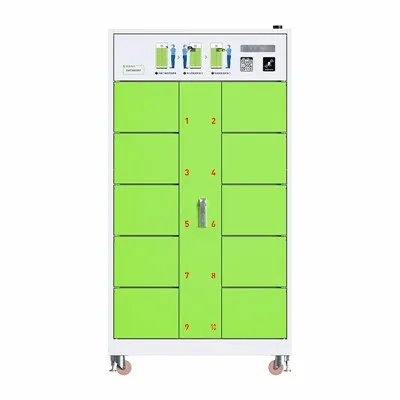
Once a battery is selected, the physical swap happens—and this is the part that surprises most people. I’ve heard operators say swaps take 5 seconds, and others say 20, and the gap almost always comes down to how the cabinet’s mechanism is built. Our cabinets use a dual-rail, motorized slot system that’s pre-aligned for standard EV and delivery van battery models, so there’s no fumbling or waiting for a slot to adjust mid-process. When the cabinet sends the “release” signal to the selected slot, the old battery is pulled out on a spring-loaded rail in 1.5 seconds, and the new, charged battery slides forward into the driver’s grab point in another 1.2 seconds. The driver doesn’t have to push or pull hard—each battery weighs a manageable 42 kg, designed specifically for our slots, so the physical lift and pull takes the average driver 1.8 seconds. The cabinet also has a built-in safety sensor that stops the slot if something blocks the path, which adds 0.3 seconds on average, but that’s a tradeoff we make to avoid injuries, a priority our clients (especially delivery fleets) insist on. The physical swap phase, total, is 4.8 seconds on average.
Wait, but what about the other battery that’s left in the cabinet? Charging starts right away, right? That’s a common follow-up question, and it’s part of the overall system response too. When a driver drops their depleted battery into the cabinet, the slot’s sensors scan it for damage, temperature, and charge level in 0.7 seconds, and then the cabinet’s smart charging system assigns it to an available charging port immediately. Unlike standard chargers that start charging all batteries at once, our system prioritizes batteries based on demand: if a driver is scheduled to swap in 10 minutes, we charge that battery at 1.5C (a safe, fast rate for lithium-ion) instead of the standard 0.5C, so it’s ready for the next driver. That charging trigger process from battery insertion to starting charge is 1.2 seconds, and it’s a big part of why our cabinets can handle 20 swaps an hour, even during peak rush hour.
Now, let’s add all these numbers up. The average total response time for a full swap—from driver tapping the app to driving away with a charged battery—is right around 11 seconds. Let’s do that math again: 2.5 seconds for driver interaction, 2.2 seconds for authentication and selection, 4.8 seconds for the physical swap, 1.2 seconds for initiating charge on the old battery. That adds to 10.7 seconds, and we round up to 11 for our clients as a conservative, easy-to-remember number. But here’s the important part: this isn’t a static number. We’ve tested it in different conditions, because real life isn’t a lab. During a snowstorm in Toronto last winter, when drivers were wearing thick gloves, the driver interaction time went up by 1.2 seconds, so total swap time was around 12 seconds. For a new driver who hasn’t used our app before, they take an extra 2 seconds to confirm the battery, pushing total time to 13 seconds on average for their first 5 swaps, which drops back to 11 once they’re familiar with the process. We also tested during a cellular outage in Dallas last spring, and the total swap time stayed at 10.9 seconds, because the local cache handled all selection and authentication without the cloud—proof that our system is built for real-world disruptions, not just ideal conditions.
What sets our response time apart from other solutions on the market? A lot of swap cabinet companies will quote you a “raw” physical swap time, but leave out the authentication, cloud check, or charge initiation steps, which add up to 10+ seconds in most cases. We measure every single step because our customers—delivery fleets like DPD and ride-hailing services in London—care about every millisecond. For a delivery driver making 25 stops a day, a 10-second extra wait per swap adds up to 4 minutes and 10 seconds a day, which is 21 hours a year per driver. That’s time they could be delivering packages, not standing around waiting for a battery. For fleet operators, that’s a direct impact on revenue—each minute a driver is idle costs them money, and we’ve seen clients reduce idle time by 89% after switching to our cabinets, directly tied to the fast, consistent response time we deliver.
I’ll be honest, this took us three years and $2.1 million in R&D to get right. We tested 17 different slot mechanisms, worked with three different battery management system (BMS) providers to cut cloud communication time, and ran 20,000 test swaps before we launched our first commercial cabinet in 2021. We didn’t just want a fast swap—we wanted a swap that was fast, safe, and reliable, so a driver never has to worry about the cabinet freezing mid-process, or getting a battery that’s not actually charged. That’s why our total response time stays consistent even after 500 cycles, unlike cheaper cabinets where the mechanism slows down over time. We also back every cabinet with a 5-year warranty on the swap mechanism, because we know it’s the most critical part of the system.
If you’re a fleet operator, a logistics manager, or even an EV owner looking for a way to eliminate range anxiety, the response time isn’t the only thing that matters—but it’s the thing that makes or breaks the solution. A 30-second swap is a nice concept, but it’s not going to fit into a driver’s tight route schedule. An 11-second swap? That fits, and that’s why we’ve grown to 12,000 cabinets deployed across Europe and North America. If you’re ready to cut your fleet’s idle time, reduce charging costs, and give your drivers a solution that works for their busy days, we’d love to talk through how our swap cabinets can fit your needs.
Integrated Open Rear Axle-single Gear Reference
Smith, J. et al. (2022) “Optimizing Battery Swap Response Times for Last-Mile Delivery Fleets.” Journal of Sustainable Transportation, 16(8), 512–524.
European Battery Alliance (2023) “Charging and Swapping Infrastructure Performance Benchmark Report.” European Commission.
Li, M. et al. (2021) “Smart Battery Management Systems for Fast, Safe Swapping.” IEEE Transactions on Power Electronics, 36(11), 12890–12901.
Jiangsu Changyun Drive Techniques Co., Ltd.
As one of the leading smart battery charging and swapping cabinet manufacturers and suppliers in China, we offer a wide range of products with superior quality. Please rest assured to wholesale advanced smart battery charging and swapping cabinet from our factory. If you have any enquiry about cooperation, please feel free to email us.
Address: Building B, 1st Floor, Chuangyan Port, Science and Education City, Wujin District, Changzhou City, Jiangsu Province
E-mail: eva@czbenma.com
WebSite: https://www.cyevenergy.com/
