Hey there, fellow gem lovers and travel junkies! Let’s cut to the chase—if you’re someone who’s ever hauled around a bag full of loose sapphires, tiny ruby studs, or even a handful of family heirloom diamonds, you’ve probably wondered at least once: Can I toss these in a travel jewelry case and call it a day? As someone who’s spent years building a business making these cases, I’ve fielded this question so many times that I could probably answer it in my sleep. Today, let’s break this down—no stuffy textbook jargon, just real talk from a guy who’s tested every type of gem and every type of case (mostly the messy, wrong way first). Travel Jewelry Cases
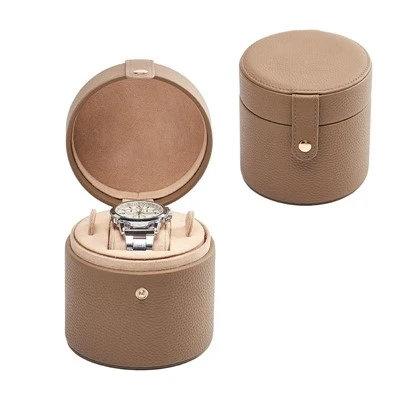
First off, let’s get one thing straight: not all travel jewelry cases are created equal. I’ve had customers come to me panicking because they stuffed a 3-carat engagement ring and a bag of raw peridots into a cheap, flimsy case from a drugstore, only to find the peridots scratching the ring’s polished band and a tiny sapphire gone missing by the time they landed in Cabo. That’s the nightmare scenario, right? But before you swear off travel cases entirely, let’s talk about why that went wrong, and when it’s actually totally safe to store gemstones in these things.
Let’s start with the basics of gemstones themselves—because this isn’t just a “will it fit?” question, it’s a physics and chemistry question. Gemstones are ranked on the Mohs Hardness Scale, which tells you how scratch-resistant they are (higher number = harder, harder ones scratch softer ones). Diamonds are a 10, rubies and sapphires are 9, emeralds are 7.5 to 8, amethyst is 7, peridot is 6.5 to 7, opals are a wimpy 5.5 to 6. That’s huge because even a hard plastic travel case’s rough interior lining, or the metal snaps/zipper pulls, can act like a sandpaper when you’re bouncing through airport security or hauling the case in a backpack. If you’ve got a bunch of mixed-hardness gems—say, a diamond stud next to a peridot—they’re gonna rub together on the train and leave a tiny (easy-to-miss, terrible) scratch on the peridot.
Wait, but what about my travel jewelry cases? Let me be transparent here—we design ours for people who actually need to move their gems around, not just stick them in a drawer. All our cases have individual, padded slots—think soft velvet or microfiber, not that scratchy cheap felt you find on $5 cases. Those slots are sized specifically to hold one piece, so gems don’t jostle. But even with that, we don’t recommend mixing super-hard gems and softer ones loose. For example, if you’re traveling with a loose raw diamond (a 10) and a set of emerald earrings (7.5), keep those separated—even in our padded slots, a diamond’s sharp edge could nick an emerald’s facet if they rub together during turbulence.
Another big factor: moisture and chemicals. Gemstones don’t like random stuff, especially if they’re porous. Opals, pearls, turquoise—those guys are basically sponges. If your travel case has a plastic lining that traps humidity from your sweaty gym bag or a rainy day, that moisture can seep into the pores and make them cloudy or even crack. We designed our cases with breathable, moisture-wicking liners for exactly that reason. And don’t get me started on hand sanitizer or perfume—if you accidentally spill some on your case’s lining, that chemical can seep into gemstones too. Always let your gems dry completely before tucking them in, and wipe down your case after a day out.
Now, let’s talk about the “safe” gems vs. “proceed with caution” gems, because that’s the part most Google posts skip. The no-fuss, totally fine gems to toss in our travel cases: diamonds, rubies, sapphires, garnets, amethyst, citrine. These are hard, not super porous, and as long as they’re padded, you’re good. The ones you need to be careful with: opals, pearls, turquoise, amber, topaz (wait, topaz is 8 on Mohs but it’s brittle—chips easy if banged around), emeralds (they often have inclusions that make them more fragile than their Mohs number suggests). For those, I’d recommend lining your case with an extra piece of silk or wrapping each in a soft tissue, even in our individual slots. Last year, I had a customer who traveled with a string of pearls in a regular travel case—turns out the slot was a tiny bit too big, so the pearls rubbed against the metal snap, and by the end of her trip, one had a faint scratch. We fixed her up with a set of custom-sized silk pouches for her pearls, and she hasn’t had an issue since.
Wait, what about loose gems? The ones you’re holding for a custom ring or necklace, not already set. Can those go in travel cases? Absolutely—if you use compartments with dividers, not just a big pouch. Loose gems that roll around are the worst, because you can lose them (I’ve lost a tiny sapphire down an airport security conveyor belt, so trust me on that) or they chip against each other. Our travel cases have removable dividers, so you can adjust the slots to hold 1 gem or 10, whatever you need. Just make sure each loose gem is nestled in its own little space, not stacked on top of another.
Let’s get real about a common misconception: some people think you need a fancy, $100 gem case for travel, and our stuff is way more affordable, so it must not work. That’s not true. The difference between a bad case and a good one (like ours) is the padding and the structure. A cheap case will stretch, so the slots gap open. Ours are made with rigid, lightweight foam that keeps the shape, even when you stuff it in a carry-on. We also add extra reinforcement around the zipper and the edges, so if you drop it (and you will—we all drop stuff), your gems stay put. I’ve tested our cases with a set of 5 loose sapphires, a diamond ring, and a pair of emerald studs, bouncing it in a backpack on a road trip from New York to Miami, and not a single scratch or lost gem. That’s the kind of stuff we build our reputation on.
Now, what about the rare, super valuable stuff? Like a $10k ruby necklace or a heirloom diamond brooch. Can you put that in a travel jewelry case? Yeah, but you might want to add an extra layer of protection. Our cases have a lock option, if you spring for the upgraded version, so you can keep it in your carry-on instead of checked luggage. We also sell little anti-tarnish inserts that you can tuck in the bottom, especially if you’re traveling for weeks—some gems, like silver-set gems, can tarnish if they’re sealed up for too long, and those inserts help prevent that. Just don’t leave your case in a hot car or a checked baggage hold, where temperatures can swing wildly. Gemstones don’t like extreme heat or cold—something like an opal can crack if it’s left in a hot car for a day, same with pearls if they dry out.
Let me wrap this up with the real talk no one tells you: travel jewelry cases aren’t just for costume jewelry. They’re totally functional for gemstones, as long as you pick the right one for your gems and use it the right way. You don’t need a fancy vault in your carry-on—you just need a case that keeps your gems separated, padded, and protected from moisture and rough stuff.

If you’re someone who’s planning a trip and need a case that can handle your gems, I’d be stoked to chat. We’ve got all sizes, from tiny ones that hold 2 rings to big ones for loose gems and multiple pieces. Just reach out to our team, and we can walk you through what works best for your specific gems and travel plans. No hard sales pitch, just real advice from a guy who’s been in this game long enough to know how frustrating it is to lose or damage something you care about.
Travel Jewelry Cases References:
- Mohs Hardness Scale, International Gem Society.
- Gemstone Care Guide, Gemological Institute of America (GIA).
- Travel Jewelry Storage Best Practices, Jewelers of America.
- Porosity and Gemstone Stability, American Gem Trade Association (AGTA).
Shenzhen Yingbosang Crafts and Gifts Limited
Shenzhen Yingbosang Crafts and Gifts Limited is one of the most professional travel jewelry cases manufacturers and suppliers in China, also supports customized service. Please feel free to wholesale bulk premium travel jewelry cases made in China here from our factory. For quotation, contact us now.
Address: No.8, Ruiji Road, Nanlian Community, Longgang, Shenzhen, Guangdong, China
E-mail: andyzeng@ybsgroup.cn
WebSite: https://www.ybsbox.com/
