If you’ve ever sifted through uniform embroidery for work jackets, spied custom branding on a vintage baseball cap, or even stared at a worn logo on a well-loved backpack, you’ve probably encountered woven patches—but you might not have stopped to think that there are different types of woven patches, each designed for very specific jobs. As a woven patches supplier that’s worked with brands ranging from local high school sports teams to global outdoor apparel lines for over a decade, I’ve lost count of how many times a customer has walked in (or emailed in) asking for “a patch” only to realize they need something far more tailored to their product, budget, and durability needs. Woven patches aren’t a one-size-fits-all accessory; understanding the differences between their types can make or break a brand’s look, longevity, and even its customer loyalty. Let’s break down the most common and useful categories of woven patches, how they work, and what makes each right for your project. Woven Patches

First, let’s start with the basics that tie all woven patches together: at their core, they’re made by interlacing fine colored threads on a tight base fabric (usually cotton or polyester) using industrial looms. Unlike embroidered patches, where thread is stitched on top of fabric to create a slightly textured, raised design, woven patches have threads embedded into the fabric surface, resulting in a smooth, crisp finish—ideal for fine details that would blur or look bulky when embroidered. But even with that shared foundation, different weaving techniques produce very different patches for different uses.
The most widely used type of woven patch is the standard cut-edge woven patch, sometimes called a die-cut woven patch. This is the workhorse of the woven patches world, and it’s what most people picture when they think of a woven logo patch. We weave the design directly onto the patch’s fabric, which is then cut to the exact shape of your logo (a circle, a team mascot, a custom monogram, whatever you need) using a precision die cutter. The edges of the patch are heat-sealed at the same time as cutting to prevent fraying, so you don’t have to worry about loose threads even after years of wear.
Standard cut-edge woven patches shine for projects where fine detail and a smooth, understated look are key. I still remember the first big order we landed for a regional chain of independent coffee shops—they wanted small, 1.5-inch woven patches for the chest of their baristas’ aprons, with tiny lettering for the shop’s slogan and a minuscule illustration of their signature lavender latte art. If they’d gone with embroidery, those small details would have looked fuzzy and thick, but the tight weave of the cut-edge patch kept every curve of the latte art sharp and every letter crisp, even after 6 months of constant washing and scrubbing coffee stains. That order turned into a yearly reorder, and now we make their patches for all 12 of their locations. The biggest downside here is that very small text (smaller than 8pt) or extremely fine, intricate lines (thinner than 0.5mm) can get lost in the tight weave—so if you have a super-detailed design, we need to adjust.
Next up is merrow-edge woven patches, a step above standard cut-edge when it comes to durability and a more polished, structured look. Merrow edging isn’t just a random stitch; it’s a specific overlock stitch that wraps tightly around the entire perimeter of the patch, stitched directly to the edge of the woven fabric. This isn’t a cut that’s sealed later—each merrow stitch is part of the patch’s construction, so it’s far more resistant to fraying, even if the patch gets caught on a backpack strap or a jacket zipper. Merrow-edge patches also have a slightly raised, defined border that makes them look more intentional and high-end than cut-edge patches, which is why they’re so popular for formal apparel, corporate uniforms, and premium accessories.
I’ve worked with a national logistics company for three years on their uniform patches, and they swear by merrow-edge woven patches. Their drivers’ uniforms are pushed to the limit: constant bending, lifting, brushing against loading dock corners, and dozens of wash cycles a month. A few years ago, they switched from embroidered patches to woven merrow-edge patches after hearing from drivers that their old patches would start fraying and peeling within 3 months. Now, their drivers report that the same patches last 18 to 24 months with no fraying, and the vivid woven colors stay much brighter than the faded embroidery they used to get. The only tradeoff here is cost: merrow-edge patches take a few extra minutes of construction time, so they’re a bit pricier than standard cut-edge, but for high-wear applications, the durability is worth every cent.
Another type that’s growing in popularity, especially for custom brand projects and nostalgic apparel, is the bordered woven patch—wait, no, actually, it’s called the satin-edge woven patch, though sometimes people mix it up with standard cut-edge. Satin-edge patches use a much smoother, flatter cutting blade and a heat-seal process that results in a edge so thin and smooth it looks like satin fabric, instead of the slightly thicker edge of a standard cut-edge patch. This is perfect for very small patches, like the tiny brand logos on the side of a baseball cap, or patches with extremely tight, curved shapes (like a swirl or a small animal’s ear) where a standard cut-edge would leave a bulkier line.
Last year, a small independent streetwear brand came to us with a wild design: a 1-inch woven patch for the back of their new line of bucket hats, with a tiny dragon curled inside a heart. The dragon’s wings had super thin, curved lines, and the entire patch was only an inch across—way too small for a merrow edge, and almost too small for a standard cut-edge. The satin-edge patch was the solution here. We used a precision laser cutter to trim the edges and a low-heat seal to keep the edge smooth, so the thin wing lines didn’t get lost, and the overall patch looked sleek and polished, not clunky. The brand sold out of their entire hat line in 2 weeks, and they’ve been sending us new designs every month since.
Now, let’s talk about the less common but highly specialized woven patch types, because if you have a specific use case, these can be game-changers. One is the jacquard woven patch, which is the highest quality woven patch you can get, made on a jacquard loom that allows for hundreds of different thread colors and extremely intricate, photo-realistic details. Unlike standard woven patches that use a limited palette, jacquard looms can weave gradients, subtle shading, and even multi-dimensional looks by varying thread tension and color placement—something that embroidery can’t replicate as seamlessly. We only use jacquard weaving for high-end projects: luxury fashion brands, limited-edition collectibles, or patches that will be seen from a distance (like stadium signage or event backdrops). A few months ago, a small independent sports team came to us for a commemorative patch for their 50th anniversary, with a design that blended the team’s original 1974 logo with a modern version, plus a subtle gradient of their school colors around the edge. A jacquard woven patch was the only way to make that gradient look smooth and the two logos blend without looking messy, and the team sold every patch they made for the anniversary in 3 days. The downside of jacquard patches? They’re the most expensive type, and they have a longer lead time because the loom has to be specially programmed for each design.
The last specialized type I want to mention is the self-adhesive woven patch, which isn’t a different weaving technique—it’s a woven patch with a heat-activated adhesive backing, so you don’t need to sew it on. This is perfect for temporary projects, bulk orders where sewing would take too long, or customers who want to apply the patch themselves at home. We use the same high-quality woven fabric and threads for our self-adhesive patches, so they look identical to non-adhesive patches, but the backing is a strong, heat-resistant adhesive that stays in place for years on clothing, backpacks, luggage, and even phone cases. A lot of our college customers love self-adhesive woven patches for their dorm gear or graduation gifts, and small event planners use them for one-off conference swag where sewing every patch would be a logistical nightmare.
Now, I know when you’re ordering patches, you’re probably not just thinking about weaving techniques—you’re thinking about your brand, your budget, and how the patch will hold up for your customers. Here’s a quick guide to help you pick the right type for your project: if you need a low-cost, high-volume patch for small apparel details, go with standard cut-edge. If your patch will be on high-wear items (work uniforms, outdoor gear, heavy backpacks), invest in a merrow-edge patch for durability. For very small, intricate shapes or tiny branding, satin-edge is your best bet. If you’re going for luxury, photo-realistic, or limited-edition patches, jacquard woven is the way to go. And if you want something easy to apply temporarily or for bulk swag, self-adhesive woven patches work perfectly.
At the end of the day, as a woven patches supplier, our job isn’t just to make patches—it’s to help you make a patch that works for your brand, not the other way around. Too many customers come to us with a design they love, only to find out it won’t translate well to their chosen patch type, and we’re here to adjust, advise, and problem-solve. We’ve been in this business long enough to know that a great patch doesn’t just look good—it works hard, lasts long, and makes your brand feel intentional, even in the smallest detail.
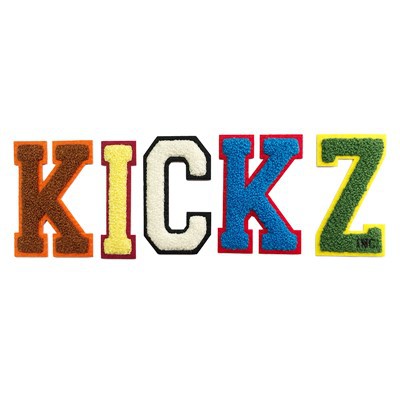
If you’re ready to turn your logo, team mascot, or brand idea into a woven patch, we’re here to help. Reach out to our team to share your design, ask questions about the best type for your project, or get a custom quote—we’re happy to walk you through every step, from initial design to final delivery.
Woven Patches References
Woven Patch Technology and Manufacturing Standards. Textile Institute, 2021.
Durability Analysis of Woven vs. Embroidered Patches. Journal of Apparel, Design, and Technology, vol. 15, no. 2, 2022, pp. 89-102.
Kaishen Garment Accessory Co., Ltd.
As one of the most professional woven patches manufacturers and suppliers in China, we’re featured by quality products and low price. Please rest assured to wholesale bulk cheap woven patches from our factory. Contact us for customized service and free sample.
Address: No.1, Yangguang Road, Shanwu Village, Shijie Town, Dongguan City, Guangdong Province
E-mail: patch@shiujan.com
WebSite: https://www.kspatch.com/
