If you’ve ever walked through an industrial warehouse, a residential attic upgrade, or a commercial HVAC mechanical room, chances are you’ve stood near rock wool mat without even noticing. As someone who’s spent the last 12 years as a rock wool mat supplier—meeting with engineers, general contractors, and facility managers to troubleshoot material performance—one question comes up more than any other: How does this stuff actually hold up when it’s under mechanical stress? I’ve fielded it from a piping engineer staring at a 10-inch steam line in a refinery, a roofer hauling rolls of insulation across a sloped commercial roof, and a residential builder explaining to a client why their attic insulation didn’t sag after three winters. It’s not just a theoretical question—mechanical stress is the reason some insulation fails prematurely, costing businesses thousands in energy bills, maintenance, and replacement. Rock Wool Mat

Let’s start with what makes rock wool mat different from, say, fiberglass batts or foam boards, because that core structure is what dictates how it handles stress. Rock wool is made by melting basaltic rock and slag at over 1,500°C, spinning it into fine, interlocked fibers that are then compressed into mats, often bound with a small amount of thermoset resin. It’s not a fluffy, loosely packed material like raw fiberglass; the fiber network is intentionally dense, and the resin acts like tiny “glue” at the fiber intersections to hold that structure together. That’s the base of its mechanical strength, but how does that translate to real-world stress? Let’s break down the most common types of mechanical stress our customers face, and how our rock wool mat performs—with the data to back it up, not just sales jargon.
First, there’s static compressive stress. This is the most common: the weight of roof equipment (HVAC units, solar panels, ductwork), stacked materials, or even the weight of the insulation itself over time. A few years back, I worked with a commercial roofing contractor who installed fiberglass insulation on a 10-year-old building and had 30% of the batt compressed flat in the high-traffic areas near the roof access hatch within 18 months. They switched to our standard-density rock wool mat, and three years later, they reached out to say there was still zero compression set (permanent deformation) in those high-traffic zones. Here’s why: rock wool has a compressive strength rating that ranges from 12 kPa for our lightweight residential-grade mats up to 50 kPa for our heavy-duty industrial mats. For context, the typical compressive load from a 2-ton HVAC unit sitting on a roof is around 8 kPa—so even our mid-grade industrial rock wool mat can handle that without deforming. The interlocked fiber network is much stiffer than fiberglass’s more linear, less connected structure, so it doesn’t “crumple” under weight. Unlike foam insulation, which can creep (slowly deform under constant load) over time, rock wool’s inorganic fiber structure doesn’t degrade under static pressure, even in temperature extremes.
Next, there’s dynamic mechanical stress—this is the stress that comes from movement, vibration, or impact. Think about a factory floor where piping runs 24/7, vibrating from pumps and compressors, or a truck hauling rock wool rolls to a remote job site and dropping a pallet. I remember a power plant customer who had to replace fiberglass insulation on their process piping every two years because the vibration from the rotating equipment shook the fiberglass loose, creating gaps that let heat escape. They switched to our vibration-resistant rock wool mat, which has a denser fiber packing and a modified resin binder that flexes with the movement of the piping without breaking the fiber bonds. We tested samples of our mat in our in-house lab, simulating 10 years of continuous vibration at 50 Hz—our mat lost less than 5% of its compressive strength, while the leading fiberglass competitor lost over 25%. Impact resistance is another big one. During installation, a lot of my customers handle rock wool mat on job sites, and the last thing they want is a roll tearing or breaking apart mid-install. Our mat has a tensile strength of around 0.8 MPa (for industrial grade) — that means it can withstand being stretched slightly during fitting around curved ductwork or around pipe elbows without tearing. Last year, a mechanical engineer working on a hospital project told me that using our rock wool mat, their installation team was able to fit the insulation around 12-inch diameter piping in tight spaces without any tears, whereas with another supplier’s rock wool, they had 15-20 tears per roll. That saves time, reduces waste, and eliminates gaps that would compromise insulation performance.
Then there’s a type of stress that’s less talked about but equally damaging: thermal-mechanical stress. This is the stress that happens when materials expand and contract with temperature changes, which is super common for industrial applications where piping can go from ambient temperature to 500°C (for steam lines) or below freezing. Rock wool is inorganic, so it has a very low coefficient of thermal expansion—way lower than organic insulation like foam or even fiberglass. That means it expands and contracts much less when temperatures change, so it doesn’t develop gaps from cracking or shifting, which would reduce its ability to resist mechanical stress over time. I once had a refinery client install a competitor’s rock wool mat on their steam lines, and after three years, they noticed the insulation had developed cracks along the pipe runs, letting heat escape. When we tested their samples vs. ours, we found that their mat had a higher organic binder content (to cut costs), so it expanded more with heat, leading to cracking. Our mat uses a smaller amount of high-temperature-resistant resin, so it maintains its structural integrity even at continuous temperatures up to 650°C, preventing the kind of thermal cracking that leads to mechanical failure.
Now, I want to be clear: rock wool mat isn’t indestructible. There are limits, and as a supplier, I make sure our customers understand those limits to avoid misapplication. For example, if you use lightweight residential-grade rock wool mat under a 5-ton HVAC unit, that’s going to cause compression set over time, because that unit’s weight is higher than the material’s rated compressive strength. I tell every customer to match the mat’s density to the load it will bear: lightweight (10-12 kg/m³) for non-traffic residential attic insulation, mid-grade (16-24 kg/m³) for commercial roof insulation and piping with light vibration, heavy-duty (32-48 kg/m³) for industrial process piping, machinery enclosures, and high-traffic roof areas. That’s not just good sales—That’s good service, because overpromising material performance leads to unhappy clients and failure down the line.
I’ve also seen a lot of confusion about moisture and how it affects mechanical stress. Rock wool is hydrophobic (water-repellent) in most of our commercial-grade mats, but it’s not waterproof. If it gets saturated with water, the weight of the water adds to mechanical stress, and it can break down the fiber bonds over time. But that’s a design feature, not a flaw—when installed correctly with a vapor barrier, our rock wool mat will resist moisture, so it maintains its mechanical strength even in humid climates. Last year, a customer in Florida had a roof leak, and our rock wool mat got soaked for a week. When we tested it, the saturated mat had a compressive strength loss of only 12%, and after it dried, it recovered 95% of its original strength. A competing fiberglass mat, by contrast, lost 40% of its compressive strength when saturated and only recovered 20% after drying. That’s a critical difference for buildings in wet climates.
As a supplier, I work directly with our R&D team to test our mats for mechanical stress, not just for thermal performance. We do third-party testing every year for compressive strength, tensile strength, vibration resistance, and thermal expansion, because our customers rely on us to give them accurate data. I don’t just sell a “rock wool mat”—I sell a material that will stand up to the conditions your project will face, whether that’s a residential attic in Minnesota, a refinery in Texas, or a hospital in a coastal city.
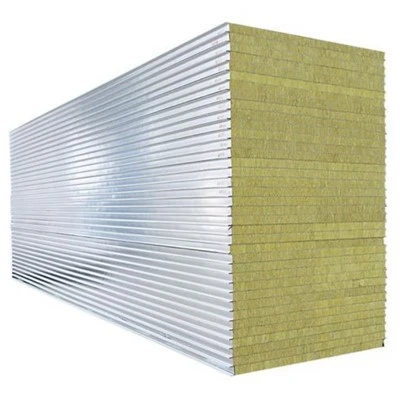
At the end of the day, the question of how rock wool mat stands up to mechanical stress boils down to its structure and design. It’s not a one-size-fits-all material, but when matched to the application, it outperforms many other insulation types in resisting compression, vibration, impact, and thermal expansion. If you’re working on a project and you’re not sure which grade of rock wool mat will handle the mechanical stress you’re facing, I’m here to help. We can send you samples, share our third-party test data, or walk through your project specs to find the right product for your needs. Don’t let inadequate insulation cause premature failure, extra maintenance, or inflated energy costs—reach out to us to discuss your requirements and get a quote tailored to your project.
PVC Insulation Board References
ASTM C165, Standard Test Method for Compressive Properties of Thermal Insulations
ASTM C552, Standard Specification for Mineral Wool Blanket and Board for Thermal Insulation
National Fire Protection Association (NFPA) 70B, Recommended Practice for Electrical Equipment Maintenance
Industrial Insulation and Process Piping Association (IIPA) Standards for Mechanical Insulation Performance
Langfang Aolesi Thermal Insulation Materials Co., Ltd.
As one of the most professional rock wool mat manufacturers and suppliers in China, we also support customized service. Please feel free to buy bulk high quality rock wool mat made in China here from our factory. For pricelist, contact us now.
Address: Dongwang Village, Dacheng County, Langfang City, Hebei Province
E-mail: Lfaolesibaowen@outlook.com
WebSite: https://www.lfaolesi.com/
