Hey there, I’m Jake—been running my own electric forklift supply business for almost 7 years now, and one of the questions I get most from folks in logistics and warehouse ops is straight up: “Can an electric forklift actually stack containers?” Let me cut to the chase first: yes, 9 times out of 10, it can, but it’s not a one-size-fits-all call, and that’s where I see so many people getting tripped up. No stuffy jargon here, just real stuff I’ve seen play out on job sites, plus the hard specs that actually matter. Electric Forklift
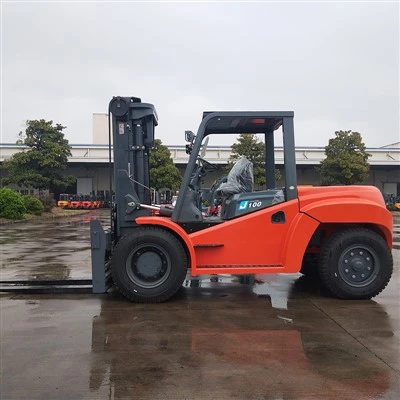
First, let’s get a few basics out of the way. When we talk about “stacking containers,” we’re usually talking about standard intermodal containers, right? Those are the 20-foot or 40-foot steel boxes you see on ships, trains, and semi-trucks. Stacking ‘em means lifting one up another, usually 1 to 3 tiers high—sometimes a bit more for tight yards. Traditional folks always reach for diesel forklifts here, but electric models have come a LONG way since the clunky, underpowered ones from 10 years ago. Back then, sure, a 3,000lb electric reach truck couldn’t touch a full 40ft container (which can weigh 50,000+ pounds empty, way more when loaded). But today’s electric container forklifts—wait, let’s not call ‘em “just forklifts” here—they’re purpose-built for this exact work, and most of my clients use ‘em in port yards, retail distribution centers, and even small inland container depots now.
Wait, let’s bust the biggest myth first: a regular warehouse electric forklift (like a sit-down counterbalance with a 5,000lb capacity) can’t stack containers. No way. Those are for pallets, not 10-foot-tall steel boxes. But the electric models built for container work? Their lift capacities are straight up competitive with diesel. I supply units that go from 10,000lb all the way up to 55,000lb lift ratings—perfect for empty to fully loaded 20ft containers, and even the lighter end of 40ft full loads. The key here is the mast height and stability, not just the motor. Diesel trucks have that loud internal combustion engine out front, which balances the weight when lifting heavy loads. Electric ones shifted most of the heavy battery (we’re talking 48V up to 80V lithium-ion packs here) to the base, so they get that same low center of gravity for stacking, without the fumes or noise. That’s a game-changer for indoor container yards too—some retailers store containers right in their back loading bays, and you can’t have diesel fumes drifting into the shop floor for cashiers or stockers.
Let’s talk real-world examples, ‘cause I don’t do hypothetical. Last year, a mid-sized construction materials supply company hit me up. They were using diesel forklifts to stack empty 20ft containers for storage, but their city cracked down on idling emissions—local laws were gonna fine ‘em $1,500 a week if they didn’t switch. They were convinced electric couldn’t handle it, so they brought in a third-party tester to check our 12,000lb capacity electric forklift. Turns out, it lifted a full empty 20ft container (which clocks in around 4,800lb dead weight) 12 feet high—enough to stack two tiers in their 15ft-tall yard. The tester even stayed for a full shift, running it 8 hours straight, and it only needed a 2-hour charge mid-shift. That’s way better than a diesel, which burns through a tank of fuel in 4-5 hours of heavy stacking. Plus, no more washing diesel off the undercarriage every two weeks to keep the yard clean—electric’s way simpler for maintenance, too.
Now, what about the gaps where electric might not be the best fit? I won’t lie to ya. If you’re stacking 3 or more tiers of fully loaded 40ft containers (those can hit 67,000lb loaded), most standard electric container forklifts max out around 55,000lb. For that, we do work with a few heavy-duty electric models that go up to 80,000lb, but they’re bigger, pricier, and need more yard space to maneuver. Also, super cold climates—like places where winter temps drop below -10°F—lead-acid battery electrics struggle, but lithium-ion is actually way better here, ‘cause they hold charge longer in cold. Even then, some Arctic logistics ops still go diesel for the absolute heaviest loads in deep freezes, but that’s a niche case. And don’t forget: if your “stacking” is more than just lifting containers 10-15 feet and moving ‘em short distances (like cross-country transport), electric’s not the way—range still tops out around 50 miles on a full charge, which is perfect for yard work, not long hauls.
Wait, another big selling point for electric when stacking containers: precision. Diesel trucks have way more vibration, so when you’re lining up a container’s twist locks with the one below, you can wobble a bit. Our electric models have hydrostatic steering and smooth electric lift controls, so operators say it’s 20% easier to line up the locks without jostling. That cuts down on damage—scratched container corners, bent twist locks, even scraped pavement— which saves clients a ton of money in repairs. Also, the noise level: an electric forklift stacking containers is like a regular conversation, at 70dB max. A diesel’s 85dB or higher, loud enough to require ear protection for anyone within 20 feet. That’s huge for yards that have people walking around, or if you’re operating near a school or residential area.
I get it, a lot of fleet managers are skeptical of switching ‘cause they’ve heard electric is more expensive upfront. Sure, a base electric container forklift is 15-20% pricier than a diesel equivalent. But run the numbers: diesel costs for fuel, maintenance, emissions fines, and oil changes add up to about $1.20 per hour of operation. Electric? That’s like $0.15 per hour for electricity, plus way less maintenance (no oil filters, no spark plugs, no exhaust systems). Most of my clients break even on the upfront cost in 18-24 months, and then it’s pure savings after that. One client in Atlanta told me they saved $22,000 in the first year just on fuel and emissions fees after switching 3 of their stacking forklifts to electric.
Wait, let’s clear up the twist lock thing, ‘cause that’s make or break for container stacking. The twist lock is that big metal pin you lower into the corner castings of containers to lock them together. A lot of people ask if electric forklifts have the hydraulic power to handle that—yes, all the models I supply come standard with a container attachment kit that has dual twist lock hooks, and the hydraulic system is rated specifically for that heavy lifting. No rigging extra parts, it’s a bolt-on kit that takes 10 minutes to install.
Now, who actually uses electric forklifts for container stacking these days? It’s not just big ports. Small inland depots, retail storage yards, construction companies, even event venues that store containers for festivals and pop-up shops. I had a client in New York City that uses our electric forklifts to stack empty containers in a 10,000 sq ft rooftop yard—they can’t have diesel fumes up there, so electric was the only option. Before that, they were renting diesel trucks, but now they own two of ours and save $8,000 a month in rental fees.
I’m not here to say electric is perfect for every container stacking job. If you’re a port moving 50 containers a day, 10 tiers high, you might still want a diesel for the extra range and heavy load capacity. But for 80% of the container stacking jobs I see out there—small to mid-sized yards, indoor operations, cities with emissions rules—electric is not just a viable option, it’s the better one.
Here’s the thing: I’ve been in this business long enough to know when people come to me, they’re not just buying a forklift. They’re solving a problem—emissions fines, high fuel costs, maintenance headaches, or even just operator safety. When they ask if electric can stack containers, the answer isn’t a flat yes or no. It’s: yes, if you pick the right model, match it to your yard size, load weight, and local rules. That’s what I help clients figure out.
If you’re in the market for a forklift to stack containers, or just want to run the numbers on switching from diesel, I’m here to chat. No sales pitch, no pressure—just me, Jake, telling you what works and what doesn’t based on 7 years of seeing these units in action. Reach out whenever you’re ready to talk through your specific needs, and we can find the right fit for your business.
Electric Forklift References
OSHA. (2022). Forklift Safety Standards for Container Handling. Occupational Safety and Health Administration.
Material Handling Industry Association. (2023). Electric vs. Internal Combustion Lift Truck Performance Report. Material Handling Industry Association.
Container Owners Association. (2021). Best Practices for Stacking Intermodal Containers in Urban Yards. Container Owners Association.
Qingdao Dawnshine Heavy Industry Co., Ltd.
As one of the most professional electric forklift manufacturers and suppliers in China, we have world-leading production equipment and strong manufacturing capabilities. Welcome to wholesale discount electric forklift in stock here and get quotation from our factory. For price consultation, contact us.
Address: South Side of Qiwang Road, Yueshan Village, Naoshan Economic Development Zone, Qingzhou City, Shandong Province, China
E-mail: laven.wang@china-dawnshine.com
WebSite: https://www.ds-forklift.com/
